

our success will kill us
what to do with an inheritance nobody warned us about

sweet juices of rhubarb and grapes ran down the fingers of all the tender-hearted Black boys where my dad was raised in the 1960s.
where high-pitched giggles of temperate summers covered up winters frigid sins.
his childhood home was in a gray victorian. the interior stretched too wide, as it must’ve, to hold all of the neighborhood’s fostered Black children.
the real little rascals is how he calls them now, him and the others. and his eyes, now sixty-four-years-old, always wrinkle with audacity and joy when he recounts the mischief they had gotten into on dodge street of buffalo, new york’s eastside.
“did you notice the children treating you differently,” his daughter, i—it’s me, decades later, called him one night to ask him this very specific question.
“what do you mean,” he, now an elder, looked at me through FaceTime with a scowl, as he does when he tries to understand his (self-identified) strangest child.
my dad was is a nerd1; a matter-of-fact, well-actually, finger-extending kind of nerd. and this predisposition had earned him a place in buffalo’s gifted adolescent programs and in a specialty engineering high school. as my dad grew up, it became apparent he was headed toward a certain kind of success in a way the other rascals on dodge street were not.
“when you began to receive academic recognition and were transferred to different schools,” i elaborated. “did you notice the other children weren’t as friendly to you? like you were being left out?”
“yes,” my dad’s voice rose in tone and near imperceptibly quivered. “i guess, they did treat me different.”
his foster caregivers, who everyone on dodge street called “grandmother,” and “grandfather,” made sure my dad ate, had a safe place to sleep, and that he went to school, but grandmother and grandfather were not his source of affection. they were hugless and cool--as was the way of the generation of the great migration, born Black in the early 1900s.
instead, it was his child peers, his fellow little rascals, with whom my dad felt love and developed a sense of his place in this world.
“i haven’t thought about it like that in a while,” he finally continued, “yea, my friends and the neighborhood kids would make comments or talk to me different after that. i would wonder: what the heck…”
my dad’s unique curiosity and education, something too innate for him to even notice made him different, had begun to mark him as both exceptional and defect within the community who had previously made him feel safe in the absence of his blood.2
“that must have been hard,” i sympathized, peering at him as his voice trailed off, noticing the little boy in him. we all must eventually find the little children in our parents.
“yes, it was sad,” my dad concluded, with a dark cloud around his crown that i couldn’t be sure was my doing or not.
it was me, after all, who had invoked the spirit of the past, recalling specific memories for him as if it had happened to me, as if the experience was my own, because though it did not happen to me, vestiges of his memories were, as i had just discovered, living in my body, too.
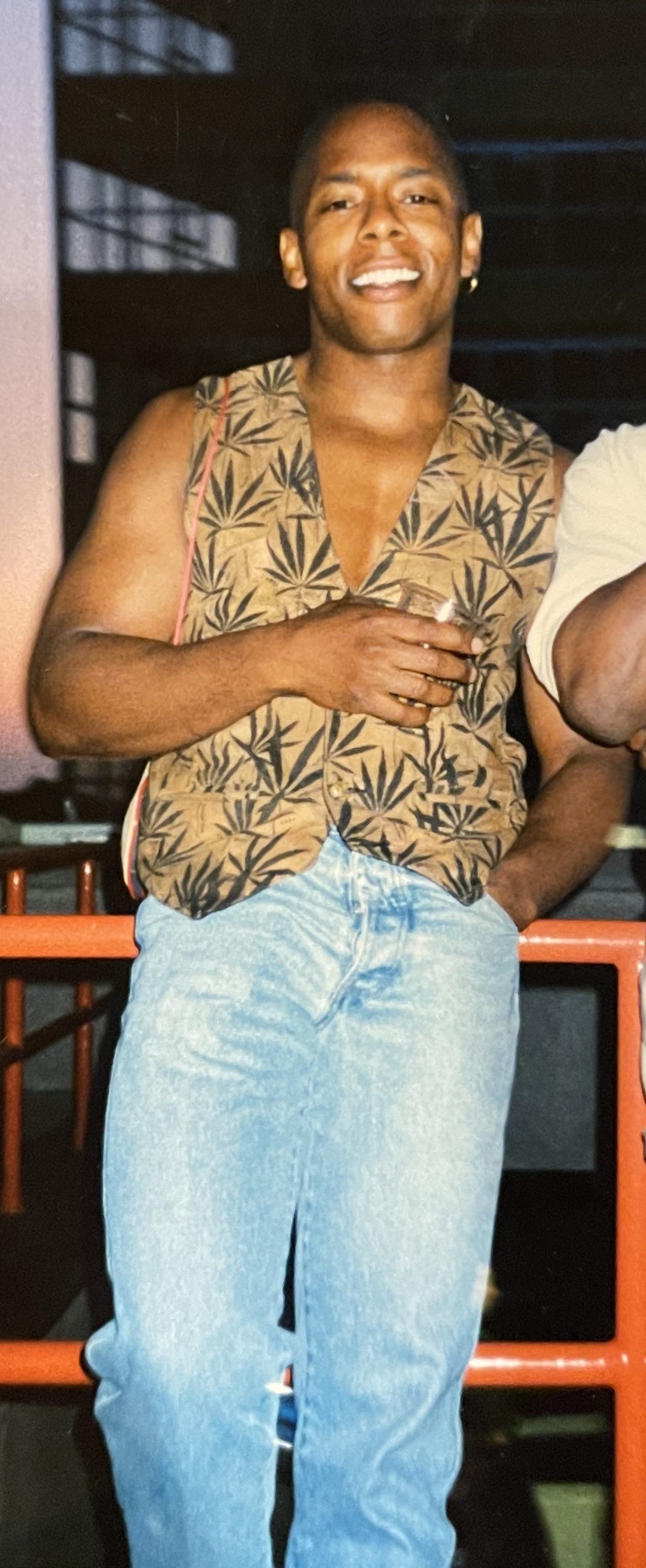
three nights before i had called my dad to unearth “emotional trauma,” as he calls it, i had discovered something unsettling about myself.
you see, i am coach for visionary leaders who are changing the world. and my clients’ voices had been ringing between my ears like haunting church bells,
“you’re gifted, tifanei.”
“wow. you’re very good at this.”
“i’m so proud to work with you.”
“your sessions are brilliant.”
their praise kept repeating, one after another, after another; on a loop, landing like hot arrows into my spine, behind my heart. it was agonizing. i was terrified.
i tossed my synthetic throw over my head, and laid frozen and curled, eyes unblinking, just as i assume i did in my mother’s womb some three and a half decades ago.
i could not make sense of my terror. why every time someone affirmed my work, told me how it positively impacted them, and encouraged me to keep going, my nervous system shifted into a near collapse. i felt like i was dying.
i closed my eyes and slept for three whole days.
listen, i am my father’s daughter in multiple ways. (#nerdlife). i have spent an inordinate amount of time in my life pleasurefully consuming research on the psychology of emotional and mental health. i knew that a fear which makes no sense to me, is a fear that lives hidden in my body, trapped, remorseful, ashamed, and in need of my attention.
and so, when i finally re-birthed from my synthetic womb, i used the same somatic and emotional practice i have been trained by psychologists to guide my clients through.
i sat cross legged, closed my eyes, and summoned—as if a dark conjured spirit—the sensation of fear into my body.
she arrived and i followed fear’s lead as she grew hot and sharp behind my pancreas, between my lungs, and around my throat. and deep within her sensations, i found, as vivid as 4k, miniature versions of both my parents, waving frantically to show me that my fears were inherited… from them.
and so this is why i had called my dad that night, to ask him if what i saw, his adolescent memories of becoming defect, sitting between my lungs and wrapped around my throat, was actually real.
and he affirmed me.
sometimes important things happen to us with such grandness that it becomes part of our autobiographical narrative, a cohesive story we tell ourselves and each other about our life.
and sometimes important things happen to us with such subtly, that they constrict our sense of who we are, hidden just beyond our awareness, but with equal impact on our lives.3
my dad’s experience—having been neglected by his blood, and then later his peers who created distance at the turn of his academic recognition—encoded in his adolescent mind a damning story that perceived success as a threat to the love most fundamental to him.
and this perception, unresolved, revealed itself in the ways he later moved through the world, and in how he raised me to move through the world, and became an un-narrated perception of danger within me, too.4
our fear was beginning to make sense to me.
but it wasn’t just my dad who had appeared in my somatic inquiry. my mom was there, waving frantically, too. so i called her next.


everyone knows my mom is not a reliable storyteller. she embellishes for her own delight, without regard to the truth or even her audience’s interest. it’s one of the most ridiculous things about her, and one of my favorite things, too.
and so, when i called her, to ask her about the images i saw of her hidden behind my pancreas, i knew her narrative could only be as true as her whims. both as important.
“all they do is ask me for money,” she holds her breath, and snarls, lamenting her deteriorating relationship with her two younger brothers. “they act like i’m their mother. i hate it.”
my mother and her brothers have been left behind on earth. left behind by their older sister who passed from cancer in the early 2000s, and by my late grandparents some several years after. it’s just the three of them now.
as my mother and father have aged, their wealth has grown. and as my uncles have aged, for reasons i can only guess, their wealth has not—it has stabilized into something of nothing.
at some point, my two uncles stopped regarding my mom as a sibling and began to see her as a lifeboat in an otherwise unforgiving sea of economic uncertainty and despair.
“mom, please breathe,” i asked her while she continued to protest, because her stingy breath was somehow holding mine hostage, too. it’s hard to breathe when your mother isn’t breathing.
my uncles do not call her to see how she is doing, to see if they can add ease or love or connection into her life. they call her for groceries, to cover the mortgage on the house my grandparents left behind—the one in which both of my uncles lived—and occasionally to door-dash pizza before they receive their first-of-the-month subsidies.
“it just stresses me out so much,” she responds after a quick acquiescent breath.
they call it the black and brown tax, a tentacle of the so-called5 racial wealth gap: the idea that the select few who “make it” are the saviors for those who do not, a system that hollows and corrodes our first and essential relational bonds, even when that’s all that is left of the foundation of us.
it’s excruciating to witness my mother lose her parents and her sister to death and simultaneously lose her brothers to racial capitalism’s affront to our most essential needs.
insidious. because our brains are social organs, our only organ, that gets lonely and becomes ill without social connection.6 and it’s not an exaggeration to say i have witnessed part of my mom wither away in this particularly lonely experience of grief.
a brain built for connection is a brain that learns through connection.7 and my mother’s anger, her grief, and her fears became my instruction, an implicit reminder that wealth or financial success can and will be destructive, and may cost us the people we love.


my father had encoded that to rise is to be abandoned. my mother had encoded that to have is to be drained. two implicit fears interlocked within me.
when we inherit implicit fear from our parents, our mind can interpret each and every one of our own experiences as evidence the fear is necessary and true.8
for example, these fears arrived with me in an interesting way in law school.
while in law school, i noticed the higher my grades were, the more exclusive my job opportunities, the more prominent my position in the institution, the less safe i felt among my peers (specifically the resentful, coddled young white men around me who—seriously—went to the dean to try to expel me because, as editor-in-chief, i had banned racist discussions in the coveted law review room, and because i had organized protests on behalf of black lives matter. eleven years later and it’s still fuck them).
i had interpreted my success and rise-to-visibility within the white institutions through the implicit beliefs i inherited: the racism was evidence of disconnection, unbelonging, and assured trauma. beliefs that compounded my already crumbled mental health and depleted self-confidence.
what if instead of believing i did not belong, my mind encoded the disruption i caused in good white america as evidence of the marvelous influence i have by just existing as me—nerdy, audacious tifanei.
what would have become possible for me, if instead of pain and confirmation of my inherent aloneness, all i saw in those law school experiences was evidence of my capacity to create, to transform, and of my power?
a lot. a lot would have felt more possible.
similarly, i have clients who come to me, insisting that their version of the truth is “just the way the world works,” not yet aware that their perceptions of the world may have actually been shaped by a singular experience that 1) wasn’t even theirs and 2) isn’t definitive of anything but that one-single-moment in time.
unaware that what’s available to them is so much grander, if they’re willing to release their beliefs inherited from kin, even for just a moment; just long enough to allow the mind to consider a new possible truth, a new possible meaning for the world.
our implicit fears are normal, but they are not permanent and they are not truth. and we can evolve beyond our inherited beliefs to safely experience things we’ve only ever imagined as possible.
and, so, back to that night. what my beloved clients had intended as praise read as a threat to the nerves that thread my body.
they meant, “i’m so grateful to be held by you,” but my body heard “you’re in danger now that i see you in your gifts.”
so, what did i do after my parents confirmed the source of my implicit beliefs?
i sat still again.
i sat with the grief i inherited and let the emotions ring out of me, loud and unabashed, just like those church bells that had once haunted me.
i gave leave for the emotions to expand. and eventually they became so big and so free, they expanded out beyond me. and then i let them go, into the wind where they belong.
once the emotions were liberated, i stood up, tear-stained but clear-eyed. much lighter. and i began to create new confirming experiences for myself; ones that became evidence of my new beliefs.
this process is called integration. in partnership with our hippocampus, we make memories explicit that were once implicit, and now recognize them as an experience, not a belief-system. we manufacture within ourselves a powerful opportunity to “become awakened and active authors of our own life story.”[8]
it’s not easy, but it is deceptively simple.
if you will, try on my new beliefs with me: my success at any proportion is safe and destined; my visibility at any degree is medicinal and desired; and my wealth, in any form, creates strong bonds and expands my capacity for love.
and notice if you feel any resistance to these beliefs. your resistance will tell you where to begin your own inquiry.
and then, when you’re ready, join me, and my brilliant clients, as we go into the world to create new confirming experiences for our new, more expansive beliefs.9
icarus laughed as he fell. threw his head back and yelled into the winds, arms spread wide, teeth bared to the world.
(there is a bitter triumph in crashing when you should be soaring.)
the wax scorched his skin, ran blazing trails down his back, his thighs, his ankles, his feet.
feathers floated like prayers past his fingers, close enough to snatch back. death breathed burning kisses against his shoulders, where the wings joined the harness. the sun painted everything in shades of gold.
(there is a certain beauty in setting the world on fire and watching from the centre of the flames.
“no. i wasn’t a nerd. i just wanted to know how stuff worked,” my dad told me over the two days ago.
check out tyson, darity, and castellino (2005) on the social costs of high achievement and the relationship between academic success and belonging.
i love reading siegel, mindsight (2011), especially pp. 158–165, on implicit memory and the ways unseen experiences can “imprison” our lives.
if you’re interested in the science behind this idea, psychiatrist daniel j. siegel’s work on implicit memory, attachment, and child development offers a useful framework for understanding how unresolved experiences in one generation can shape the expectations of the next. see daniel j. siegel and mary hartzell, parenting from the inside out (2013).
i use the term “so-called” deliberately. to call it a “gap” implies an incidental circumstance rather than the systemic structures we have all acquiesced to by continuing to operate within them. even in periods when black wealth rises, the gap widens: between 2019 and 2022, median black wealth grew, yet the divide between the median white and black household increased by nearly $50,000. as of the most recent federal reserve survey of consumer finances (2022), the median black household holds $44,100 in net worth against $284,310 for white households, roughly fifteen cents for every white dollar. see the 2022 survey of consumer finances, as reported by the national community reinvestment coalition and the brookings institution.
i recently read ben rein, phd, why brains need friends (2025), see especially pp. 19–44.
around the time my mother was born, an empire was beginning to fall. there was an imperial scientific theory that learning can only happen through conditioning, a gradual process which requires reward and reinforcement. it is hard for me to conceptualize an entire generation of scientists holding steady to this belief, because, at the risk of offending, it seems silly. anyone who has watched a tiny toddler learn, knows they learn fastest through mimicry. they watch the shape of your lips, hear our cadence, and produce, as best they can, the sound we create with or without external reward. they are our master learners. science has since evolved to include the intelligence of the tiniest among us. and though i am not a tiny toddler, not anymore, the innate intelligence of mimicry still live within me (and all of us). if you would like the scholarly version of my toddler-based critique of behaviorism, begin with albert bandura and their social learning theory.
siegel, mindsight, again, pp. 158, 165.
if you are curious about this process at the neural level, particularly how emotional memories can become destabilized and rewritten, check out nader and monfils on memory reconsolidation.
about the author
i’m tifanei, the art behind sanctum of a bloom. i’m a former civil rights attorney and movement strategist turned leadership coach and somatic practitioner. i guide visionary leaders through somatic, emotional, mental, behavioral, and unconscious work so they can create liberation for themselves and for our world. here, i write about that work, what i’ve learned from it, and what it asks of us.
ready want to go deeper? my books open for new clients in september.
📞 work with me 1:1
✨ bring me into your organization
🐘 join the gathering of us, my annual program for visionary leaders building a better future.
❤️🔥 i’m based in durham, nc. dm me and let’s get coffee.
💬 like or comment so more readers can find this work.
thanks for reading sanctum of a bloom. this one’s public, so share it freely.
Wow, what a captivating interweaving of personal story, useful teaching and poetic words. I love how you showed the work, rather than told about it. The spoken word over music allowed me to hear your heart in its depth and captivate even more of my senses. May you receive my praise from a place of safety and delight.
Many goosebumps in this piece! Loved the pictures too!! Thank you for shining a light on the ins and outs of expanding and “succeeding”. It looks easy on the outside, and on the inside it feels different.